
«Come stai oggi, papà?»
«Cosa c'è per cena stasera, mamma?»
«Posso uscire con i miei amici questo fine settimana?»
I have no way of knowing for sure, but I’m almost certain these words crossed the lips (labbre) of my grandmother at some point in her life. My late grandma, Mary Anne Cassani, was born on September 29th, 1927 (or maybe September 30th, but that’s a long story). Unlike her parents, she was born an American citizen—una cittadina Americana—and lived every year of her life (except for the last one) on The Hill, St. Louis’s ethnically Italian neighborhood.
Her parents, my great-grandparents (bisnonni) were born in Cuggiono, a little town about 20 miles west of Milan. Stepping foot in Cuggiono is one of the goals of my life. But perhaps a more difficult goal—a goal that has taken up permanent residence in the back of my mind—is that of acquiring the language of Cuggiono and its people. The language of my great-grandparents. The language of my grandma.
Italiano.

Cosa Hai Detto?
Grandma Mary was bilingual, but as far as I know, her parents never spoke any English (or, if they did, they only knew a few words and phrases). I never met my great-grandparents. But I heard stories about them, and I had the privilege of visiting Ellis Island and finding the very page of the book they signed upon their arrival in the United States (Stati Uniti). I heard stories about how grandma would translate for them due to their inability to understand Inglese.
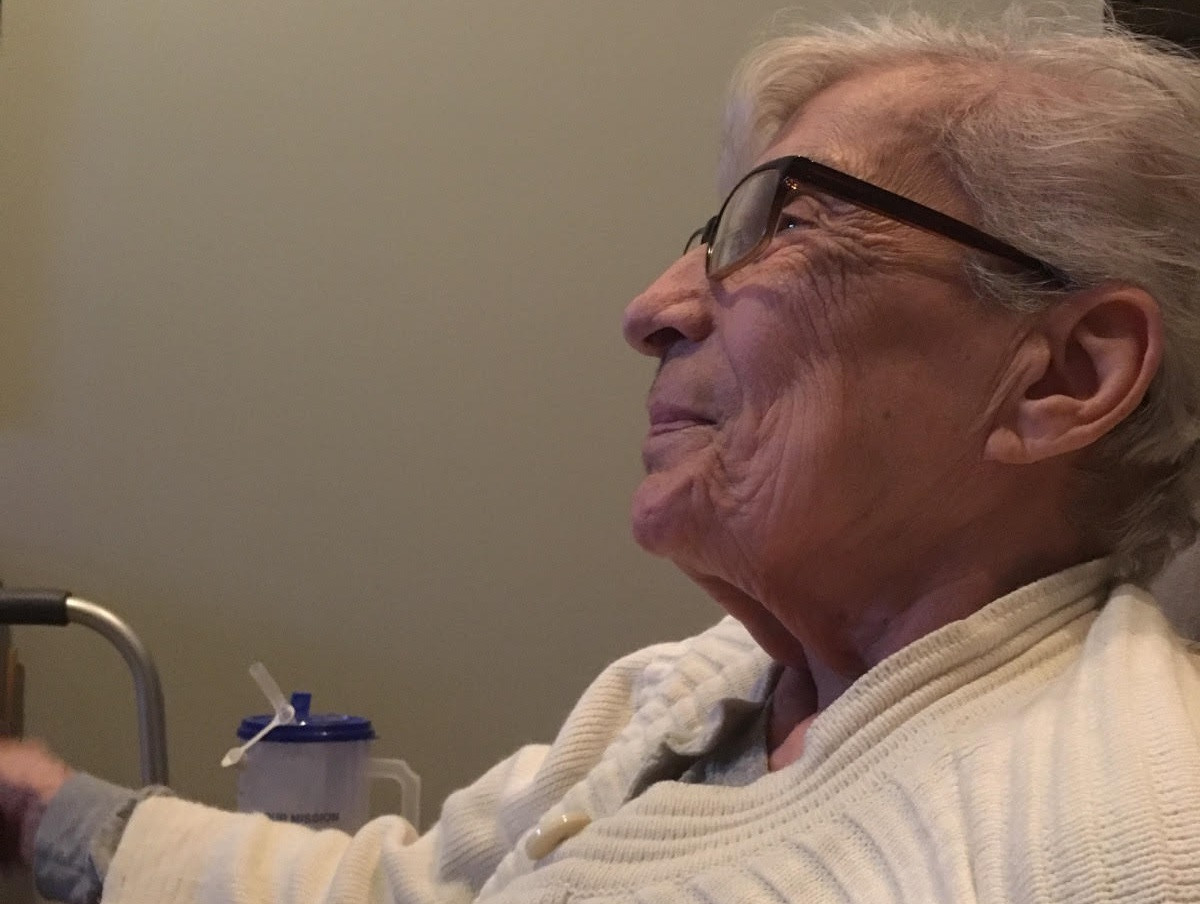
Grandma Mary passed away in April of 2017, but while she was still with us, I asked her if she still knew Italian. She told me, “No, not really. I forgot it all.”
"I forgot it all." An admission that’s equally triumphant and heartbreaking. Heartbreaking, obviously, in that my family lost a core part of our heritage. But triumphant in that by learning English, my grandma was truly able to establish herself as an American.
See, I imagine it would have been very important for my great-grandparents to assimilate. Italian immigrants weren’t exactly treated well back then, and miei bisnonni would have wanted my grandma to have every advantage possible to her as a second-generation Italian. Nobody outside of The Hill would have taken very kindly to that “guinea” language, after all.
Of course, over time, the perception has changed drastically. Italian culture is well celebrated in America. Italian cuisine is considered to be some of the best in the world. The movie that tops most peoples’ best-of-all-time list is The Godfather. The situation is similar for television and The Sopranos. Though much ink has been spilled about whether or not the depiction of Italian Americans in those works is flattering or felonious, I’ll chalk them both up as wins for the Italians for now.
Still, grandma has been gone for nearly a decade now, and with her death came the loss of yet another American who could speak Italian (or at least could at one point).
My mother never learned it. She has a nice wooden cutout of the word “cucina” above the pantry door in her kitchen, and when she makes pizza from scratch (some of the best you’ll ever have in your life, by the way), she dons her “Mama’s Cucina” apron with its Italian flag-colored heart on it. But she can’t speak the language. And neither can I.
Yet.
Language Learning in the Age of Generative AI
Learning a new language is no small feat. I’ve been determined to recapture the mother tongue for some years now, but life so easily gets in the way. Though lately, I’ve decided to try again—this time, with some new tools.
Grammar comes naturally to me. Even without understanding the vocabulary, I can sort of parse out what’s going on in an Italian sentence when I read it. But it’s the damn words. I mastered the pronunciation of Italian long ago; I can read a sentence as volubly as any native speaker (admittedly at perhaps 75% speed). But I'm having trouble actually picturing the real-life image paired with each word.
When I read the word “tree” in English, without thinking, the leafy, arboreal sight of a proud oak pops into my mind. When I read the word «quercia,» though (those angled brackets are Italian quotation marks, by the way), my brain has to process to really understand the meaning of what I just read. It’s the vocabulary that’s frustrating me.
So, I looked up the 1,500 most commonly used words in Italian, and I’ve been studying the hell out of them. I’m probably at about 70% proficiency. I’ve only been at it for about 6 weeks, so I’m pretty happy with my progress. The next step will be listening to them and responding back to form coherent, intentional sentences. But with whom?
That’s where artificial intelligence comes in.
I understand that the public at large is probably a bit tired of hearing about AI at this point. And trust me—I get it. The marketers have beat people over the head with it quite a bit in the past few years. But ChatGPT’s ability to maintain a natural, fluid conversation with its text-to-speech capabilities is absolutely incredible. It’s the kind of thing Apple wishes Siri was back in 2012. And the customizability is the key to language acquisition.
I’m a big believer that you can’t really learn or master a language without speaking it and hearing someone else speak it back. Short of living in Italy for an extended period or making a habit of hanging out with some old Italian ladies on The Hill, though, I never really had that option—up until ChatGPT came along.

OpenAI lets you create your own bespoke “GPTs,” custom-written instructions that serve as your own miniature language learning model (LLM). In other words, GPTs focus on certain, specific tasks and cut out all of the noise and distractions that may come with the more general models built into the program.
This means you can take your vocabulary list (or segments of it) and tell a GPT, “You and I are going to have conversations using only these 300 words. Please speak to me at 60% speed.” Or, you can tell another one, “Your job is to write stories at a fourth-grade reading level using only the 200 words in the vocabulary list provided to you.” As you become more comfortable with speaking or reading, you can add more words and ratchet up the difficulty. It’s really an amazing piece of technology, and it’s perhaps the best substitute for a real, native speaker—someone to whom I don’t have access.
Un Giorno...
I can’t imagine even attempting to describe this kind of technology to my grandma Mary, who struggled to work her non-smart cell phone, let alone her parents who came over to the United States on a steamship in the early 20th century. They wouldn’t even have been able to fathom it. It wouldn’t compute.
Yet it’s exactly what’s serving as the bridge that I hope will connect me back to them as I learn more and more Italian. I’ve heard that learning a new language can entirely reshape the way you think about life and the world around you. I haven’t had the chance to experience that firsthand, but I hope to someday relatively soon.
My wife took two years of Italian in college to complete her language studies, and I’ve been trying to convince her to learn alongside me. She’s expressed at least lukewarm (tiepido) interest, though she maintains a much larger passion for learning Japanese and American sign language (ASL).
I’ve couched the proposition of our learning Italian together with the idea that someday, after our careers are finished and our hair has long-since turned gray, we could move to Italy. We could retire there, and a few times a year, we could host her sisters, my brother and sister, and all of their spouses and future children. Una casa con bambini, gatti, cognati, nipoti, familia—amore. Chi lo sa? Un giorno, forse.
Hey—I guess the studying is going alright so far.